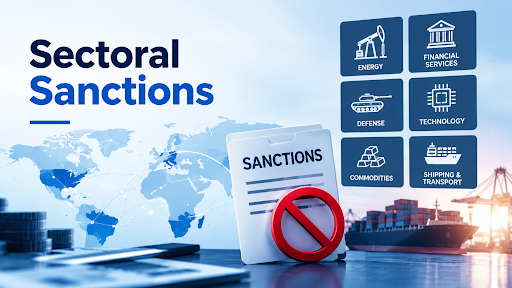

Financial institutions operating across international markets must navigate complex sanctions regulations while processing payments, managing business relationships, and serving customers. Sectoral sanctions create particular challenges because they restrict specific activities, transactions, or dealings involving designated industries and entities rather than necessarily blocking all their assets.
Manual reviews can make it difficult to identify relevant restrictions consistently, especially when transaction volumes increase or regulations change. Automated sanctions screening helps organizations identify potential exposure, investigate alerts, and strengthen compliance procedures. When implemented correctly, it can improve efficiency while supporting more informed decisions.
Understanding Sectoral Sanctions and Their Compliance Challenges
Sectoral sanctions typically impose restrictions on particular sectors, financial activities, or types of transactions associated with specified countries, entities, or individuals. Depending on the applicable regime, restrictions may affect access to capital markets, certain loans, debt instruments, or other defined activities.
Unlike comprehensive asset-blocking measures, sector-specific restrictions do not automatically prohibit every transaction involving a targeted party. Their application depends on the relevant jurisdiction, the parties involved, the transaction’s structure, and the precise terms of the restrictions.
This complexity makes sectoral sanctions compliance challenging for banks, fintech companies, payment providers, and international businesses. Compliance teams must understand not only who is involved in a transaction but also what activity is taking place and whether a specific prohibition applies.
Why Manual Sanctions Screening Can Fall Short
Traditional sanctions screening processes often rely on separate databases, spreadsheets, and manual reviews. These methods may work for smaller operations but become difficult to maintain as customer relationships and transaction volumes grow.
Analysts may overlook relevant updates, struggle to identify indirect exposure, or spend excessive time reviewing alerts that do not represent genuine violations. Inconsistent documentation can also make it harder to explain why a transaction was approved, rejected, or escalated.
Addressing these limitations requires a structured process that combines reliable data, appropriate technology, and clear decision-making procedures.
How Automated Screening Improves Compliance
Automated systems can support sanctions compliance by collecting relevant information, identifying potential matches, and directing alerts to the appropriate reviewers. Their effectiveness depends on the quality of the underlying data and how the organization configures its screening rules.
1. Identifying Relevant Sanctions Restrictions
An automated solution can compare customer, counterparty, and transaction information against relevant sanctions data. This helps compliance teams identify potential exposure that requires further investigation.
A well-designed workflow should distinguish between sanctions lists, restrictions on specific activities, and broader prohibitions. Simply matching a name against a database may not establish whether a particular transaction is prohibited.
2. Supporting Timely Regulatory Updates
Sanctions requirements can change as governments introduce new restrictions, amend existing measures, or remove certain designations. Delayed updates may leave organizations relying on outdated information.
Automated systems can help incorporate relevant data updates into screening workflows and flag affected customers or transactions for reassessment. Organizations should verify update frequency, source reliability, and coverage across the jurisdictions in which they operate.
3. Improving Risk-Based Alert Prioritization
Not every alert presents the same level of risk. Automated screening can help prioritize cases according to factors such as the parties involved, transaction characteristics, applicable restrictions, and available identifying information.
This approach allows analysts to focus on potentially significant cases rather than treating every match as an established violation. Human review remains essential when the information is incomplete or the legal interpretation is complex.
4. Strengthening Transaction Reviews
Automation can help examine relevant transaction details, including counterparties, payment references, and available information about the underlying activity. This is particularly valuable when a restriction applies to a specific type of financing or commercial relationship.
For effective sectoral sanctions in AML programs, institutions should connect screening alerts with transaction review procedures and escalation controls. Legal or compliance specialists may need to determine whether the proposed activity falls within a restriction or an applicable exception.
Essential Practices for Effective Implementation
Technology alone cannot guarantee compliance. Organizations should establish clear policies and assign responsibility for reviewing potential violations.
Important implementation practices include:
- Maintain reliable data: Use appropriate, current sanctions information and verify its relevance to the applicable jurisdictions.
- Configure suitable screening rules: Account for names, identifiers, transaction details, and restrictions on specific activities.
- Apply human oversight: Escalate complex cases for qualified review rather than relying exclusively on automated decisions.
- Document investigation outcomes: Preserve evidence, alert histories, decision rationales, and approvals.
- Test system performance: Review false positives, missed matches, data quality, and changes in regulatory requirements.
These measures help organizations build a repeatable process while maintaining accountability for important decisions.
See also: How Do Commercial Landscape Services Improve Business Property Appearance?
Choosing Technology for Sectoral Sanctions Screening
When evaluating a solution, financial institutions should consider whether it supports relevant sanctions regimes, provides traceable alerts, and integrates with existing customer due diligence and transaction monitoring workflows.
A sectoral sanctions list is useful only when the information is interpreted in the context of the restrictions it represents. Screening technology should therefore support investigation and risk assessment rather than treating every listed party as automatically prohibited from all business activity.
AML Watcher provides AML compliance technology designed to help financial institutions strengthen screening and risk management processes. Organizations evaluating solutions should assess their data coverage, update processes, investigation features, and ability to support documented compliance decisions.
Conclusion
Automated sanctions screening can help financial institutions identify potential exposure, manage regulatory updates, and investigate alerts more efficiently. However, effective compliance requires more than matching customer names against sanctions databases.
By combining reliable information, risk-based screening rules, human oversight, and documented procedures, organizations can improve their ability to assess restricted activities and respond to emerging risks. A well-implemented approach supports stronger controls while helping businesses make consistent, evidence-based compliance decisions.